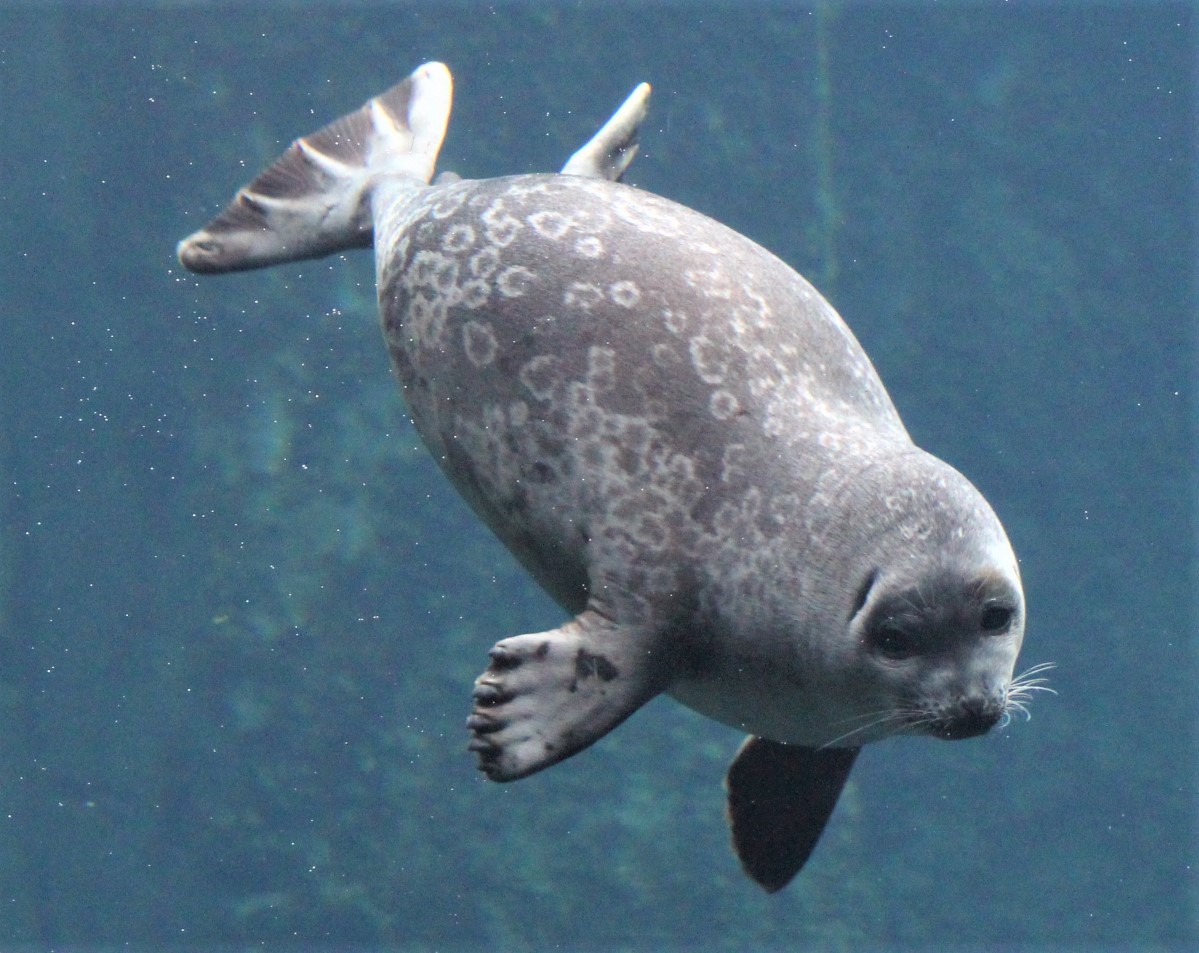
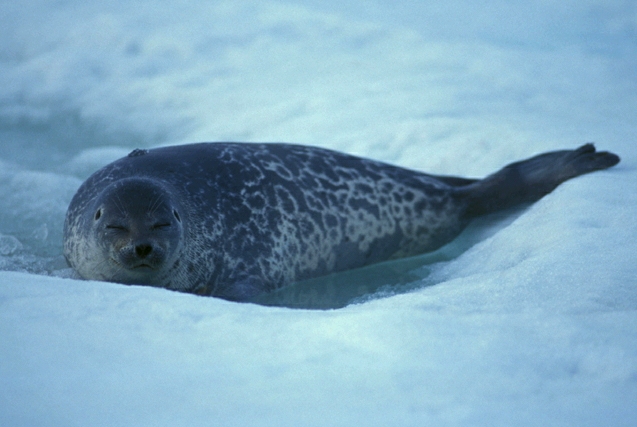
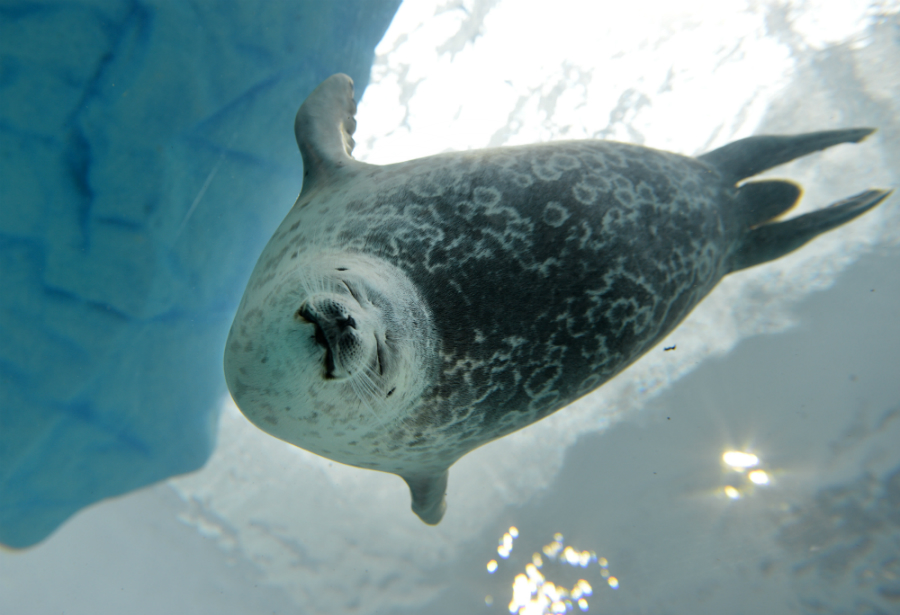
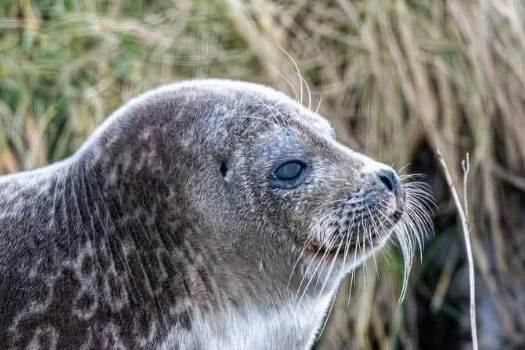
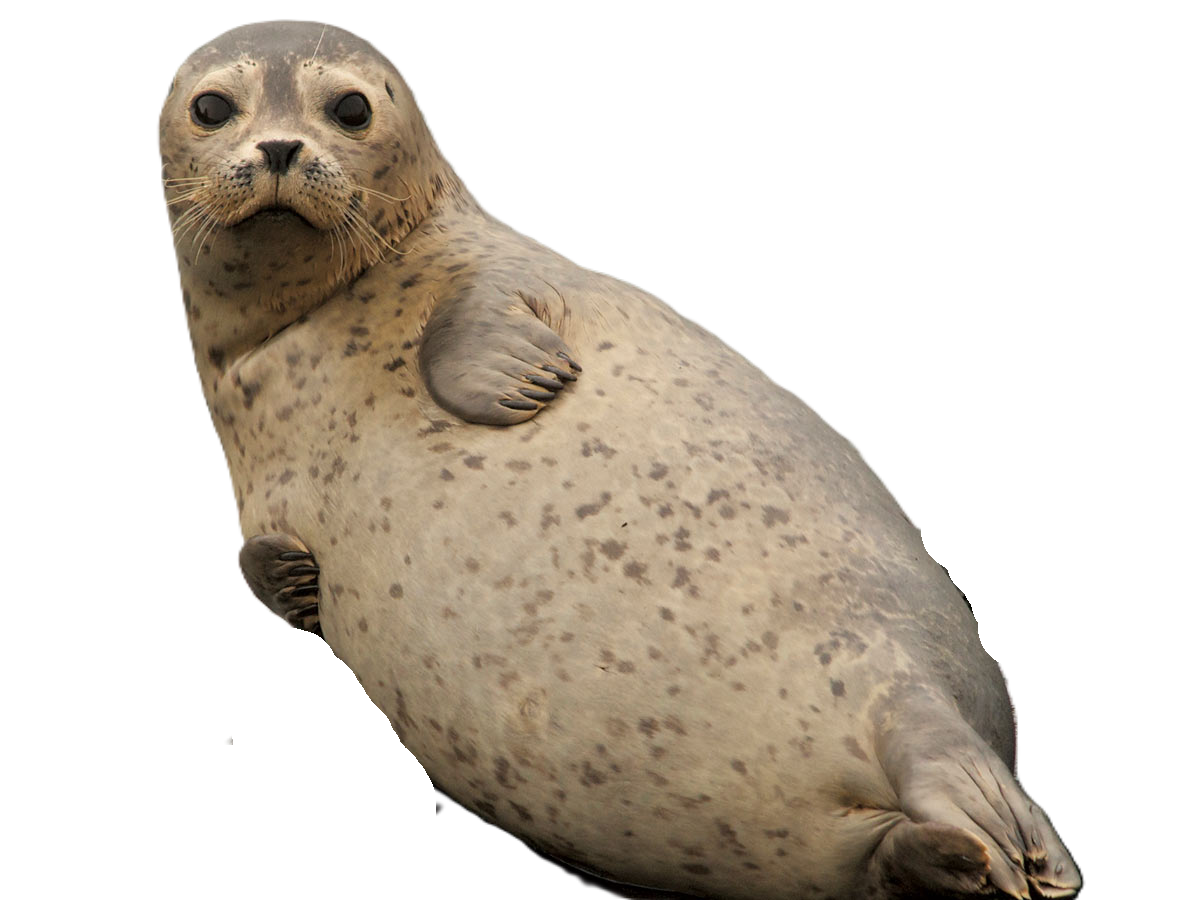
Ringed seals are the most common and smallest arctic seals. They quite obviously get their names from the small rings all across their backs.
Where they live and their diets
Ringed seals have a circumpolar distribution (range of plants, animals, or organisms that extend across high latitudes, encircling either the North or South Pole) and are found in all seasonally ice-covered seas of the Northern Hemisphere and in certain freshwater lakes.Throughout their range, ringed seals have an affinity, or preference, for ice-covered waters and are well-adapted to occupying heavily ice-covered areas throughout the fall, winter, and spring by using the stout claws on their foreflippers to maintain breathing holes in the ice.
Ringed seals remain in contact with the ice most of the year and normally whelp and nurse pups on the ice in snow-covered lairs (snow caves) in late winter through early spring. The ice and snow caves provide some protection from predators, though polar bears spend much of their time on sea ice hunting ringed seals, which are their primary prey. Snow caves also protect ringed seal pups from extreme cold. Loss of sea ice and snow cover on the ice poses the main threat to this species.
Ringed seals, like all marine mammals, are protected under the Marine Mammal Protection Act.
Cutie ringed seals